Dates & Timings
Sustainable Skies World Summit returns on 15-16 May 2024 at Farnborough International Exhibition and Conference Centre.
Event times are as follows:
Wednesday 15 May: 09:00-17:30 (Drinks Reception will take place 17:30-19:00)
Thursday 16 May: 09:00-17:00
For a full breakdown of the timings for each day, including conference and speaker details, please check out our Agenda Page.
Getting Here
By car: Farnborough International Exhibition & Conference Centre is located just off the A325, accessible from the M3 (J4) and A31. Visitors driving to SSWS should use Gate A to access the site and follow signs to the dedicated parking.
Gate A Address: Postcode: GU14 6XE – Transport Road or What3words:///neon.grows.ranch
By train: If you are coming by Rail, Farnborough International Exhibition & Conference Centre is a short taxi ride away from four stations: Farnborough Main, Farnborough North, North Camp and Aldershot.
There will be a free electric shuttle bus running between Farnborough Main train station and the venue during the following times:
Wednesday 15 May: 07:00 – 19:00
Thursday 16 May: 07:00 -17:00
If booking a taxi, we recommend using Rushmoor Taxis: 01252 333 555
By foot: If you are staying locally and/or coming by foot, you can access the venue on foot via Gate B. For local hotel information please visit our venue website.
Find our more about getting to our venue: https://www.farnborough.com/visiting-us/venue-information/getting-here/
Parking
Free onsite parking is available for all visitors to the event. Entry will be via Gate A and you will be directed to the relevant parking area.
There are electric vehicle charging points available if required but please be aware these are likely to be in high demand. We recommend charging your vehicle prior to arriving on site.
Accessibility
Our venue is fully accessible for all visitors, please visit our venue website for full details.
Registration & Security
To save time, everybody coming onsite should register and download their badges in advance. If you are inviting colleagues along to the event, please ensure they have registered prior to reaching the site.
Badges will need to be shown at the gate to access the site, and visitors are encouraged to print these at home prior to the event.
Please bring photo ID with you as this may be checked at the gate and be aware that bag checks will be carried out upon entry to the site.
Event Floorplan
Check out the innovative companies showcasing their products and services at this year’s show. Learn more on our Technology Showcase to discover all the companies involved and where to find them.
Cloakroom
There will be a cloakroom available for visitors, located in one of our meeting rooms. This will be open during the following times:
Wednesday 15 May: 09:00 – 17:30
Thursday 16 May: 09:00 – 17:00
All property is left at owners risk.
Catering
Food and drink will be available to purchase at our catering station, found next to the Technology Showcase.
Free water refill stations will be available throughout the site.
The SSWS24 Drinks Reception will take place on Day 1 of SSWS24 (Wednesday 15 May) at 17:30 finishing at 19:00.
Social Media
Follow our Sustainable Skies World Summit channels on LinkedIn, X and Instagram and join the conversation using our event hashtags: #SSWS #SSWS24 #SustainableSkies.
Exhibiting Questions
If you had any outstanding queries regarding exhibiting at SSWS24, such as build-up and breakdown timings, please refer to the event regulations or contact the Operations Team at operations@farnborough.com
Terms & Conditions
Sustainable Skies 2024 Terms & Conditions
Aviation leaders Shai Weiss, CEO of Virgin Atlantic and Sean Doyle, CEO of British Airways have been announced in the first wave of keynote speaker announcements of the Sustainable Skies World Summit 2024.
Taking place 15-16 May 2024, Sustainable Skies World Summit 2024 will see representation from the global aerospace, energy, manufacturing, finance and investment sectors, alongside regulators, academia and government departments, come together for two days of networking, demonstrations and insight sharing.
Bringing regulators and policy makers together to accelerate global standards from all corners of the world, the programme has been designed to stimulate collaboration and enable industry pioneers to leave with tangible outcomes to reach net zero targets by focusing on five key topics: sustainable aviation fuel (SAF), carbon removal, zero emissions, operation efficiency and future of flight.
Making significant steps to be more sustainable, British Airways and Virgin Atlantic are among the airlines leading the industry within the sustainable aviation sector.
Sean Doyle, Chairman and CEO at British Airways
“I am delighted to be participating in the opening panel of the Sustainable Skies World Summit 2024. The UK aviation industry is united in its commitment to achieve net zero emissions by 2050 or sooner and we must act at pace and in collaboration to achieve this goal.
“Significant action is required to address aviation’s climate impacts and at British Airways we have a clear roadmap of initiatives, including investing in sustainable aviation fuel and carbon removals, and improving our operational efficiency to reach net zero. I look forward to an interesting discussion.”
Sustainable Skies World Summit 2024 programme includes the following speakers:
- Sean Doyle, CEO, British Airways
- Shai Weiss, CEO, Virgin Atlantic
- Brian Moran, Chief Sustainability Officer, Boeing
- Val Miftakhov, CEO, ZeroAvia
- Russ Dunn, Chief Technology Officer, GKN
- Dr Mark Bentall, Head of R&T, Airbus
- Dr Florian Allroggan, Executive Director, MIT
- Raimund Zopp, Co-Founder, Flight Keys
- Jonathon Counsell, Group Head of Sustainability, IAG
- Dr Ulrike Ziegler, Managing Director, Impact on Sustainable Aviation
- Shashank Nigam, Founder and CEO, SimpliFlying
- Mark Pilling, Aviation Journalist, Editor and Consultant
- Dirk Singer, Head of Sustainability, SimpliFlying
- Gianni Spinelli, Carbon Markets Development Lead, Drax Group
- Vladimir Borodin, ECP Specialist, Decarbonizing Aviation, World Economic Forum
- Jon Matthews, Group Head of Capital and Planning, AGS Airports Ltd
- Sebnem Erzan, Head of Travel Sustainability, Google
The conference and technology showcase will display the latest developments in sustainable aviation technology and provide a forum to discuss how industry is moving in earnest from goal setting to implementation of its net zero strategies.
The conference programme at this year’s Sustainable Skies World Summit, taking place 15-16 May 2024, will be centered around 8 key plenaries.
- Bearing witness to change
- Powering the transition
- Policy Progress
- Sustainable Aviation Fuel (SAF) and Carbon Removal
- Non CO2
- Time to look at hydrogen
- Show me the money
- Integrating sustainability into operations and infrastructure
You can learn much more about this plenaries, including what is predicted to be discussed on the stages at Sustainable Skies in our plenary breakdown here.
Attendees of the two-day show will be able to take advantage of a wealth of unparalleled networking opportunities, including the highly successful Business Connections Exchange and Welcome Reception.
Bringing regulators and policy makers together to accelerate global standards from all corners of the world, the programme has been designed to stimulate collaboration and enable industry pioneers to leave with tangible outcomes to reach net zero targets by focusing on five key topics: sustainable aviation fuel (SAF), carbon removal, zero emissions, operation efficiency and future of flight.
Catch up on the highlights from the 2024 edition of Sustainable Skies World Summit here.
The next edition of Sustainable Skies will take place 17-18 March 2026. Stay tuned for the latest speaker and agenda news soon!
The conference programme at this year’s Sustainable Skies World Summit, taking place 15-16 May 2024, will be centered around 8 key plenaries. Ahead of attending the event, take a sneak peek at the topics going to be discussed.
Plenary 1: Bearing Witness to Change
In this thought-provoking plenary session, we will review the transformative landscape of sustainable aviation. Over the last twelve months, witness the dynamic shifts in the industry as we delve into the latest updates from ICAO, hear from government on their policy and key industry leaders on future plans that shape the trajectory of sustainable air travel. Our speakers will provide comprehensive overview of the evolving industry landscape, highlighting strides made, challenges faced, and the collaborative efforts propelling aviation into a greener and more sustainable future.
Plenary 2: Powering the Transition
In this session we confront the reality that transport cannot be decarbonised one mode at a time. For the first time at Sustainable Skies World Summit, we explore common challenges and solutions for achieving sustainability both on the roads and in the skies. Delve into the intricacies of topics such as hydrogen infrastructure, how is the grid going to cope with demand and feedstock availability as we unravel the complexities that connect sustainable roads and skies. Our session aims to foster holistic understanding of the interdependence between these modes of transport, providing a blueprint for a unified, eco-friendly future of transportation. Join us for a thought-provoking discussion on the shared journey towards a greener and more sustainable transport ecosystem.
Plenary 3: Policy Progress
This plenary session will highlight the latest policy developments reshaping the aviation landscape, emphasising the importance of learning from global counterparts to implement the best policies. Explore the implications of the new EU ban on misleading advertisement and the impact it holds for airlines. Unravel the global policy tapestry, examining initiatives such as Fit for 55, the Inflations Reduction Act, and the latest UK SAF Mandate. Learn from the best practices emerging worldwide as we dissect their implications on the aviation industry.
Plenary 4: SAF and Carbon Removal
This plenary critically examines the journey from Sustainable Aviation Fuels (SAF) ambition to tangible delivery, shedding light on the challenges and triumphs in the aviation sector pursuit of environmental sustainability. As the industry pledges towards SAF, we explore the gap between intentions and implementation, examining strategies to bridge this divide. Moreover, we underscore the indispensable role of carbon removals as a necessity, unravelling their significance in achieving meaningful progress towards a carbon-neutral future. An insightful discussion that navigates the complexities of turning ambitious promises into concrete actions, emphasising the crucial role of carbon removals in the path to 2050.
Plenary 5: Non CO2
This plenary session delves into the often-overlooked realm of non-CO2 effects, which constitute two-thirds of aviation’s total climate impact. With a focus on contrails, we address the uncertainties surrounding their environmental impact and explore cutting edge mitigation strategies. Uncover the latest tests, data, and technologies shaping our understanding of non-CO2 effects, as we strive to address this significant portion of aviation’s climate footprint. Join us for an in-depth discussion that offers insights into the advancements that will play a pivotal role in shaping the future of the industry.
Plenary 6: Time to look at Hydrogen
This plenary session propels us into the future of aerospace with a focus on hydrogen technology, a key player in achieving zero emissions. We’ll explore the transformative potential of hydrogen in propelling the industry towards 2050 and the crucial role of next-generation infrastructure needed to support and optimise the deployment of hydrogen-powered aircraft. Uncover this thought-provoking discussion on the promise of hydrogen, as we dissect its impacts on achieving zero emissions in aerospace and emphasise the paramount importance of developing cutting-edge infrastructure to usher in a new era of cleaner, greener flight.
Plenary 7: Show me the money
In this plenary we will discuss the imperative of unlocking investments in the pursuit of sustainable growth within the industry. We will explore how the development of more targeted KPIs in sustainability is essential to avoid the pitfalls of greenwashing . Discover strategies to align financing with genuine environmental impact, ensuring that investments contribute meaningfully to sustainable practices. Additionally, we address growing concerns among creditors regarding potential greenwashing litigations, highlighting the need for transparent and specific KPIs to guide investment towards authentic and lasting contributions to a greener future. Join us for a thoughtful discussion on the intersection of finance and sustainability.
Plenary 8: Integrating Sustainability into Operations and Infrastructure
This forward-looking session explores the future of airports, seizing opportunities to adopt low emissions development strategies in the construction of new capacities. Delve into innovative approaches that airports can embrace to reduce emissions, optimise energy efficiency, and foster sustainable practices. Uncover the transformative potential of integrating circular economy principles into infrastructure projects, ensuring that airports of the future are not just hubs of connectivity but also pioneers of environmental stewardship. A visionary discussion on the evolution of airports as we navigate the pathways to low emission development.
Recap the 2024 event here.
Sustainable Skies World Summit, organised by Farnborough International in collaboration with Sustainable Aviation, is returning to the aerospace industry’s calendar 15-16 May 2024.
Building on the resounding success of the last edition, Sustainable Skies World Summit 2024 will see representation from the global aerospace, energy, manufacturing, finance and investment sectors, alongside regulators, academia and government departments, come together for two days of networking, demonstrations and insight sharing.
Bringing regulators and policy makers together to accelerate global standards from all corners of the world, the programme has been designed to stimulate collaboration and enable industry pioneers to leave with tangible outcomes to reach net zero targets by focusing on five key topics: sustainable aviation fuel (SAF), carbon removal, zero emissions, operation efficiency and future of flight.
The conference and technology showcase will display the latest developments in sustainable aviation technology and provide a forum to discuss how industry is moving in earnest from goal setting to implementation of its net zero strategies.
An opportunity to showcase sustainable activities and discuss implantable strategies, the opening of the 2023 event was marked with a flypast from RAF Voyager ‘Vespina’ powered by a SAF blend, after it conducted an air-to-air refuelling sortie supplying SAF blend to other RAF aircraft, and the Jet Zero Council convened at Farnborough International for its 8th meeting.
Attendees of the two-day show will be able to take advantage of a wealth of unparalleled networking opportunities, including the highly successful Business Connections Exchange and Welcome Reception.
Sustainable Skies World Summit is free to attend, and registration is now live.
“It’s not about flying less, it’s about flying differently.”
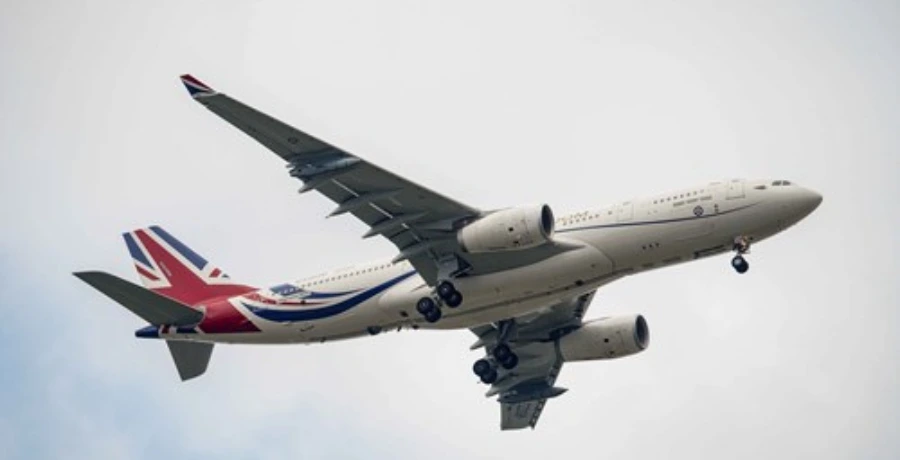
- The opening of the Sustainable Skies World Summit was marked with a flypast from RAF Voyager ‘Vespina’ powered by a SAF blend after it conducted an air-to-air refuelling sortie supplying SAF blend to other RAF aircraft.
- During the summit, the Jet Zero Council convened at Farnborough International for its 8th meeting, following its launch at the Farnborough International Airshow.
- Sustainable Aviation launched its updated Net Zero Carbon Road-Map.
Zero emission flights are within grasp, but scale, collaboration and innovation are vital to achieving net zero goals, according to the global industry leaders at this year’s Sustainable Skies World Summit.
The summit, which took place 17-18 April 2023, gathered the aerospace industry alongside the wider aviation ecosystem, including government, technology innovators, academia, investors and regulators to stimulate collaboration, promote the role of the future workforce and demonstrate the technology that is beginning to deliver meaningful progress this decade.
Following the launch of the council at the Farnborough International Airshow in July 2022 and maximising the attendance at the summit, the Jet Zero Council (JZC) convened for its 8th meeting and revealed the UK government’s two-year jet zero plan.
Government representatives, including Secretary of State for Transport, Mark Harper MP, and Minister of State at the Department for Business and Trade, Nusrat Ghani MP, attended the summit, meeting with innovators from across the sector and discussing the legislation and collaboration required to keep the UK at the forefront of the aerospace industry.
To mark the opening of Sustainable Skies World Summit, an RAF Voyager, an Airbus A330-derived Military Passenger and Air-to-Air refuelling aircraft, powered by a SAF blend, provided in collaboration with International Airlines Group (IAG) and BP, conducted an air-to-air refuelling sortie supplying SAF blend to other RAF aircraft. The flight, which used a SAF blend of 43%, performed the pre-scheduled operational refuelling sortie over the North Sea, prior to flying over Farnborough International Exhibition and Conference Centre, where the event was taking place.
Read more about the flight.
Signifying the gravity of the support and collaboration needed, Sustainable Aviation coalition published its updated Net Zero Carbon road-map outlining how commercial aviation will become more sustainable and commercially viable.
Speaking of the impact of the summit across the industry, Gareth Rogers, CEO of Farnborough International, said: “The level of collaboration, insight sharing, and attendance at the event has demonstrated the demand from the global aerospace ecosystem for the concerted progression towards net zero and the need for Sustainable Skies World Summit to be the catalyst for these conversations.
“Farnborough International is at the heart of the aerospace sector, leading the way in providing vital platforms for the industry to convene. We will continue with this critical dialogue at the Global Urban & Advance Air Summit (GUAAS), Singapore, hosted by Farnborough International, 27-28 September 2023.”
Jonathon Counsell, Group Head of Sustainability at International Airlines Group (IAG), added: “The second Sustainable Skies World Summit has completely surpassed all expectations. Attracting a wide range of inspiring speakers, sharing information and experience to help the industry on its journey towards net zero emissions by 2050, the summit has rapidly become a coveted industry event, during which many of the world’s industry leaders come together to support the delivery of truly sustainable flying.”
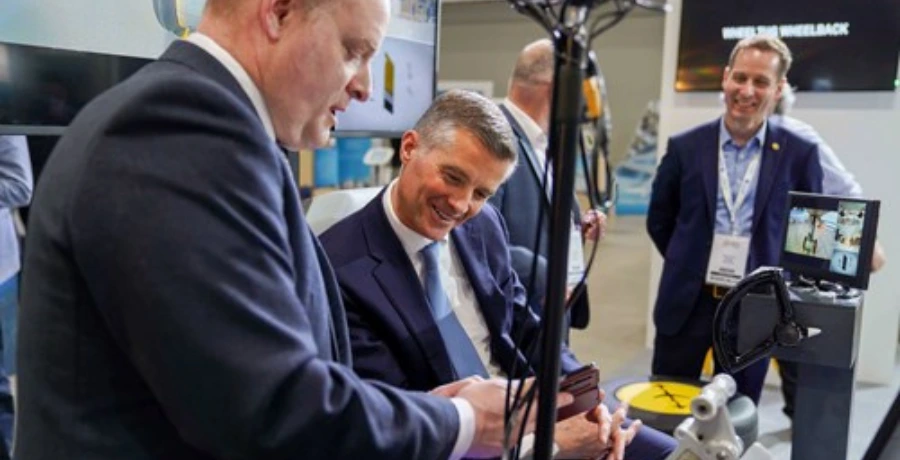
Wheeltug, ACOG, Alfanar, Rise Coalition, Reaction Engines, Rolls-Royce, ZeroAvia, GKN Aerospace, NeboAir, Zuri, Aerovolt, Carbon Engineering, Skyfly and Cranfield Aerospace Solutions showcased a range of their latest technology and innovation.
Highlighting the significant role of the event in bringing together key players from across the aviation ecosystem, Sustainable Skies World Summit received advocacy from industry supporters and sponsors, such as Airbus, Alfanar, ATI, Embraer, CFM, Catapault, ADS Group, Sustainable Aviation Coalition and Saudi Airlines.
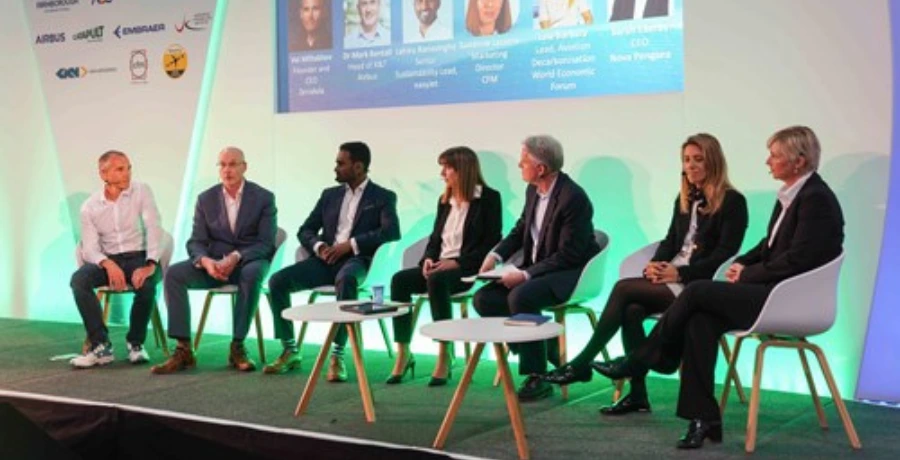
Sustainable Skies World Summit will return to the aerospace calendar on 15-16 May 2024 at Farnborough International Exhibition & Conference Centre.
Learn more about Sustainable Skies World Summit
Learn more about Global Urban & Advanced Air Summit
Farnborough, April 17: Today, at the Sustainable Skies World Summit at Farnborough, the UK aviation industry has announced higher ambition in its transition to net zero carbon emissions by 2050 with the publication of an updated Net Zero Carbon Roadmap, reflecting advances in sustainable aviation technology made here in the UK.
The Roadmap is published by Sustainable Aviation – the industry coalition of the UK’s leading airlines, airports, aerospace manufacturers, air service navigation providers, and innovation companies in sustainable aviation fuel and carbon removals – and is an update to previous plans published in 2020 and 2021. It highlights the vital role and potential for SAF and zero carbon emission technologies such as hydrogen powered aircraft and carbon removal technologies, together with the immediate advances being made in modernising airspace to help UK aviation reach Net Zero by 2050.
The aviation industry is calling on the Government to work with it by:
Maximising short-term operational efficiencies by accelerating the UK airspace modernisation programme with completion by the end of the decade. This includes reviewing the governance and processes for the programme, looking at how these can be streamlined in order to speed up delivery, and considering whether a different funding model could bring the delivery date forward.
Delivering commercial UK Sustainable Aviation Fuel production at scale this decade, meeting the Government’s commitment to seeing five UK SAF plants under construction by 2025, by providing an industry-funded price stability mechanism alongside a SAF mandate, whilst prioritising access to UK sustainable feedstocks.
Investing in zero carbon emission flight technology by uplifting matched funding levels to the Aerospace Technology Institute programme through to 2031 – to drive efficiency improvements and the development of zero carbon emission technologies, alongside investing in UK hydrogen supply.
Addressing residual aviation carbon emissions by accelerating the rollout of carbon removals, including them in the UK ETS scheme and ensuring aviation’s fair share.
Read the full Road Map here
-
RAF Voyager aircraft powered by 43% Sustainable Aviation Fuel (SAF) flies over North Sea.
-
The aircraft used a blend of traditional fossil fuels and SAF such as cooking oil.
-
Flight marks the launch of a new aviation Net Zero Carbon roadmap for commercial aviation.
The Royal Air Force has successfully completed a Voyager air-to-air refuelling flight, powered by an approximately 43% blend of Sustainable Aviation Fuel (SAF).
Flying from RAF Brize Norton, over the North Sea and via Farnborough on its return home, the Voyager aircraft also undertook air-to-air refuelling with Typhoons, as part of planned training.
Made from waste-based sustainable feedstocks, such as used cooking oil, SAF reduces lifecycle carbon emissions by up to 80% compared to traditional jet fuel and will be key to reducing the RAF’s reliance on global supply chains and fossil fuels, while improving operational resilience.
This significant moment follows a series of recent milestones achieved by the RAF towards a sustainable aviation future, including the world first RAF Voyager flight fuelled by 100% SAF.
RAF Images: Credit: Crown copyright
Defence Minister, Baroness Goldie said:
“Greater use of alternative and sustainable fuel can only lead to positive outcomes for Defence, the United Kingdom, and our collective endeavour against climate change.
“This is not an easy undertaking by the RAF, but time and again we see that by working collaboratively with our partners across industry we can achieve crucial transformation.”
Part of a two-day industry led conference – Sustainable Skies World Summit – the flight marks the UK aviation industry publishing its updated aviation Net Zero Carbon roadmap outlining how commercial aviation will become more sustainable and commercially viable.
The annual event, hosted at Farnborough International Exhibition & Conference Centre, brings together various partners from industry to showcase the latest developments in sustainable aviation technology and support efforts moving towards the implementation phase of meeting its net zero commitment.
Supporting the RAF’s ambitions to be Net Zero by 2040, the Voyager flight was part of an existing task from the Chief of the Air Staff to gather the required data to inform the longer-term transition away from fossil fuels.
The RAF has identified that using SAF and alternative aviation fuels will be critical for the future operational capability of the RAF and wider military aviation.
The UK’s SAF programme is already one of the most comprehensive in the world and supports our vision to set the UK up to be a global leader in the development, production, and use of SAF.
Supporting the Prime Minister’s priority to grow the economy, new aviation technologies and fuels provide huge opportunities for economic growth, delivering jobs and prosperity across the country.

RAF Images: Credit: Crown copyright
Chief of Staff Support and Chief Engineer, Air Vice-Marshal, Paul Lloyd said:
“The continued success of sustainable aviation fuel is reassuring to see. If we are to achieve our net zero goal by 2040 then exploiting these technologies is going to be an enormous but worthwhile endeavour.
“Despite the challenge, the benefits of reducing our reliance on traditional supply chains and fossil fuels outweigh it.
“The RAF is proud to be leading in this area and I welcome the announcement introduction of commercial uses of SAF.”
Providing increased reliability and range, the Voyager aircraft gives the RAF an enhanced capability in support of troop mobility, the movement of military assets, and supports UK air defence.
With a payload of 43 tonnes of freight and 291 seat passenger capacity, plus an aeromedical evacuation capability, Voyager also delivers flexibility in air mobility to the UK Armed forces in support of military and humanitarian operations.
During the two days of the Sustainable Skies World Summit, the Jet Zero Council (JZC) – a partnership between industry and government with the aim of delivering at least 10% SAF in the UK fuel mix by 2030 and zero emission transatlantic flight within a generation – will also meet. The Jet Zero Council is driving the ambitious delivery of new technologies and innovative ways to cut aviation emissions.
The SAF for the flight was sourced by International Airlines Group (IAG), and supplied by bp.
Dates & Timings
Sustainable Skies World Summit returns on 17-18 April 2023 at Farnborough International Exhibition and Conference Centre.
Event times are as follows:
Monday 17 April: 10:30-17:30 (Drinks Reception will take place 17:45-19:15)
Tuesday 19 April: 09:00-16:00
For a full breakdown of the timings for each day, including conference and speaker details, please check out our Agenda Page.
Getting Here
By car: Farnborough International Exhibition & Conference Centre is located just off the A325, accessible from the M3 (J4) and A31. Visitors driving to SSWS should use Gate A to access the site and follow signs to the dedicated parking.
Gate A Address: Postcode: GU14 6XE – Transport Road or What3words:///neon.grows.ranch
By train: If you are coming by Rail, Farnborough International Exhibition & Conference Centre is a short taxi ride away from four stations: Farnborough Main, Farnborough North, North Camp and Aldershot.
There will be a free electric shuttle bus running between Farnborough Main train station and the venue during the following times:
Monday 17th April: 08:00-19:30
Tuesday 18th April: 08:00-17:00
If booking a taxi, we recommend using Rushmoor Taxis: 01252 333 555
By foot: If you are staying locally and/or coming by foot, you can access the venue on foot via Gate B. For local hotel information please visit our venue website.
Find our more about getting to our venue: https://www.farnborough.com/visiting-us/venue-information/getting-here/
Parking
Free onsite parking is available for all visitors to the event. Entry will be via Gate A and you will be directed to the relevant parking area.
There are electric vehicle charging points available if required but please be aware these are likely to be in high demand. We recommend charging your vehicle prior to arriving on site.
Accessibility
Our venue is fully accessible for all visitors, please visit our venue website for full details.
Registration & Security
To save time, everybody coming onsite should register and download their badges in advance. If you are inviting colleagues along to the event, please ensure they have registered prior to reaching the site.
Badges will need to be shown at the gate to access the site, and visitors are encouraged to print these at home prior to the event.
Please bring photo ID with you as this may be checked at the gate and be aware that bag checks will be carried out upon entry to the site.
Event Floorplan
Check out the innovative companies showcasing their products and services at this year’s show. Learn more on our Technology Showcase page to discover all the companies involved and where to find them.
Cloakroom
There will be a cloakroom available for visitors, located just inside the main hall. This will be open during the following times:
Monday 17th April: 10:00-19:00
Tuesday 18th April: 09:00-16:00
All property is left at owners risk.
Catering
Food and drink will be available to purchase at our catering station, found next to the Technology Showcase.
Free water refill stations will be available throughout the site.
The SSWS23 Drinks Reception will take place at 17:45 on Monday 17 April, finishing at 19;15.
Social Media
Follow our Sustainable Skies World Summit channels on LinkedIn, Twitter and Instagram and join the conversation using our event hashtags: #SSWS #SSWS23 #SustainableSkies.
Terms & Conditions
View the SSWS23 Terms & Conditions here.
Leaders from pioneering aerospace and aviation organisations, including Airbus, EasyJet, Rolls-Royce, IATA, FAA, International Airlines Group, ZeroAvia and GKN Aerospace, are included in the Sustainable Skies World Summit speaker programme.
The programme and showcase have been designed to stimulate collaboration and enable industry pioneers to leave with tangible outcomes to reach net zero targets by focusing on five key topics: sustainable aviation fuel (SAF), carbon removal, zero emissions, operational efficiency and future of flight.
Speakers at the summit include:
- William Walsh, Director General, International Air Transport Association
- Jimmy Samartzis, CEO, LanzaJet
- Luis Gallego, CEO, International Airlines Group
- Air Vice-Marshal Paul H Lloyd
- Val Miftakhov, Founder & CEO, ZeroAvia
- Dr Mark Bentall, Head of R&T, Airbus
- David Morgan, Chief Operating Officer, easyJet
- Kerissa Khan, President Elect 2022-23, Royal Aeronautical Society
- Jonathon Counsell, Group Head of Sustainability, International Airlines Group
- Dr Marc Stettler, Reader in Transport and the Environment, Imperial College London
- Matt Finch, UK Policy Manager, Transport & Environment (T&E)
- Paul Hutton, CEO, Cranfield Aerospace Solutions
- Adam Durant, CEO, Satavia
- Amy Ruddock, VP Europe and Middle East, Carbon Engineering
- Lirio Liu, Executive Director of Aircraft Certification, FAA
- Marie Owens Thomsen, SVP Sustainability and Chief Economist, IATA
- Rodrigo Silva e Souza, VP Marketing, Embraer
- Tom Grundy, Chief Executive Officer, Hybrid Air Vehicles
- Sir Stephen Hillier, Chair, CAA
- Arvind Balan, Chief Financial Officer, Board Director, Leader, Civil Aerospace Rolls Royce
- Toby Gibbs, Chair Sustainability Working Group, British Aviation Group
- David Hyde, Aerospace Projects Lead, World Economic Forum
- Alexandre de Joybert Sustainability Director, Airports Council International Europe
- Matt Gorman, Chair, Sustainable Aviation Coalition
- Ingrid Holmes, Executive Director, Green Finance Institute
- Laurence Wildgoose, Assistant Administrator for Policy, International Affairs, and Environment, FAA
- Mike Kane, Shadow Aviation Minister, UK Government
- Daniel Ng, Chief Sustainability Officer, CAAS
- Pippa Bailey, Head of the climate change & sustainability practice, Ipsos Mori
- Rachel Gardner-Poole, Chief Operating Officer, Connected Places Catapult
Organisations showcasing their technology at the show will include Wheeltug, ACOG, Alfanar, Rise Coalition, Reaction Engines, Rolls-Royce, ZeroAvia, GKN Aerospace, NeboAir, Zuri, Aerovolt, Carbon Engineering, Skyfly and Cranfield Aerospace Solutions, alongside industry supporters and sponsors, such as BAG, ADS Group, Sustainable Aviation Coalition and Saudi Airlines.
Commenting on the importance of the event, Sustainable Skies World Summit supporter Kevin Craven, CEO, ADS Group, said: “Following a successful Farnborough International Airshow and Aerospace Global Forum in July 2022, it is critical that momentum in progressing important conversations around sustainability in aerospace and aviation is not lost.
“Sustainable Skies World Summit will unite global leaders, identify opportunities for UK businesses in areas such as sustainability and advanced air mobility, and continue industry’s important collaboration with Government.
“As the sector continues its recovery from the COVID-19 pandemic and trajectory to net zero by 2050, Sustainable Skies World Summit is the perfect opportunity to reinforce our industry’s ambition and showcase leading innovation in newer, greener, and fuel-efficient technologies. ADS is proud to be a partner.”
Taking place 17 and 18 April at Farnborough International Exhibition & Conference Centre, Sustainable Skies World Summit is free to attend.
Book Your Free Pass
(Blog last updated: 12 August 2025)
Sustainable Skies World Summit (SSWS), organised and hosted by Farnborough International, is an annual event for the aviation and wider sustainability industry to come together and accelerate progress towards Net Zero.
Since 2023, the event has centred around sustainability themes driving the industry towards Net Zero. So, let’s take a closer look at each of the 5 key themes:
SUSTAINABILITY THEMES
Sustainable Aviation Fuel (SAF)
Sustainable Aviation Fuels are highly regarded as one of the key strategies in helping the aviation industry achieve a reduction in emissions. Compared with conventional fossil fuels, SAF reduces CO2 emissions across its life cycle.
The cost and availability of SAF often comes down to government support and the supply chain, with many in the industry calling for more government-led incentives to advance the market.
The adoption of SAF extends beyond the technological advancements, requiring a robust supply chain, encouragement in research, development and investment in the production of sustainable fuel types.
SSWS will provide a platform to discuss these complex challenges, from policy and regulatory changes to industry collaboration, as the aviation industry aims to integrate SAF on a much broader scale.
Read more.
Carbon Removal
As the industry strives to find long-term solutions to alternative fuels, direct carbon capture and removal could also help companies meet Net Zero targets. This technology is still very much in early development but research suggests that it could prove to have a significant impact on climate change.
The path to effective carbon removal technologies involves not only innovation but extensive collaboration among regulatory bodies, wider industries and research institutions, which will be accelerated through SSWS’s conference agenda, technology showcase features and the Business Connections Exchange programme.
Read more.
Zero Emissions
Zero emission flight is closer to a reality that you may think. Whilst SAF might offer an immediate solution to cutting CO2 emissions, the industry is working incredibly hard to develop and test hydrogen, electric, solar and hybrid solutions that can offer zero emission flights.
Achieving zero emission flight involves addressing complex challenges, from infrastructure improvements and energy storage to the development of entirely new aircraft solutions. SSWS will become a stage for experts to share the latest developments and present new innovative approaches that will play a vital role in advancing the future of sustainable air travel.
Read more.
Operation Efficiency
Whilst discussion is often dominated by the role of aircraft themselves, there is a significant role to play from associated infrastructure including airports and flight paths.
With flight schedules being back to pre-COVID figures, operational efficiency will have a key impact on the environment and the industry’s goal to reach Net Zero by 2050. This theme encompasses optimising airport operations, air traffic management, operational practices and ultimately, minimising the aviation industry’s environmental footprint.
Read more.
Future of Flight
Advanced Air Mobility (AAM) is a key element of the future of flight and fundamentally part of the decarbonisation of the aviation sector. Development of these new vehicles is accelerating rapidly with many test flights in their early stages.
The introduction of AAM vehicles not only contributes to sustainability but also marks a transformation in how we envision air travel, potentially revolutionising urban air mobility. These new forms of air travel offer shorter commute times, reduced noise pollution levels, reduced traffic congestion and lower environmental impacts.
The realisation of AAM’s full potential is a mammoth task, requiring industry-wide collaboration that overcomes regulatory, infrastructure and technological challenges.
Sustainability Themes at Sustainable Skies World Summit
For the past 5 years, visitors to Sustainable Skies have been able to join a mixture of keynotes, fireside chats, panel sessions and workshops that examine the various nuances and issues surrounding the discussed sustainability themes. This includes highlighting the progress already made towards Net Zero, the milestones we still need to achieve on the path to 2050, and how we can inspire the next generation to get involved in the sector.
The conversation and insights gained at SSWS often serve as the foundation for the continuation of discussions at other crucial events and industry gatherings such as Farnborough International Airshow, where these sustainability themes will evolve and drive further sustainable advancements in the aviation industry. This seamless transition between events ensure that the industry’s sustainability journey remains at the forefront of sector advancements.
